Estratum 0
While wandering through Amsterdam, I met Mariana, who recommended an exhibition in a nearby church. "Keep walking straight ahead. You'll see it on your right." I found it almost immediately. Yet as I drew closer and took in its scale, I began to doubt there could possibly be an exhibition inside. I kept walking, thinking: I must have the wrong church—but at least I'll have the chance to see it. A sign further on confirmed I was in the right place. I imagined there would be a small gallery tucked away somewhere inside, set aside for exhibitions. Instead, it came as a genuine surprise to discover that the artist had intervened in the entire church.
Estratum 1
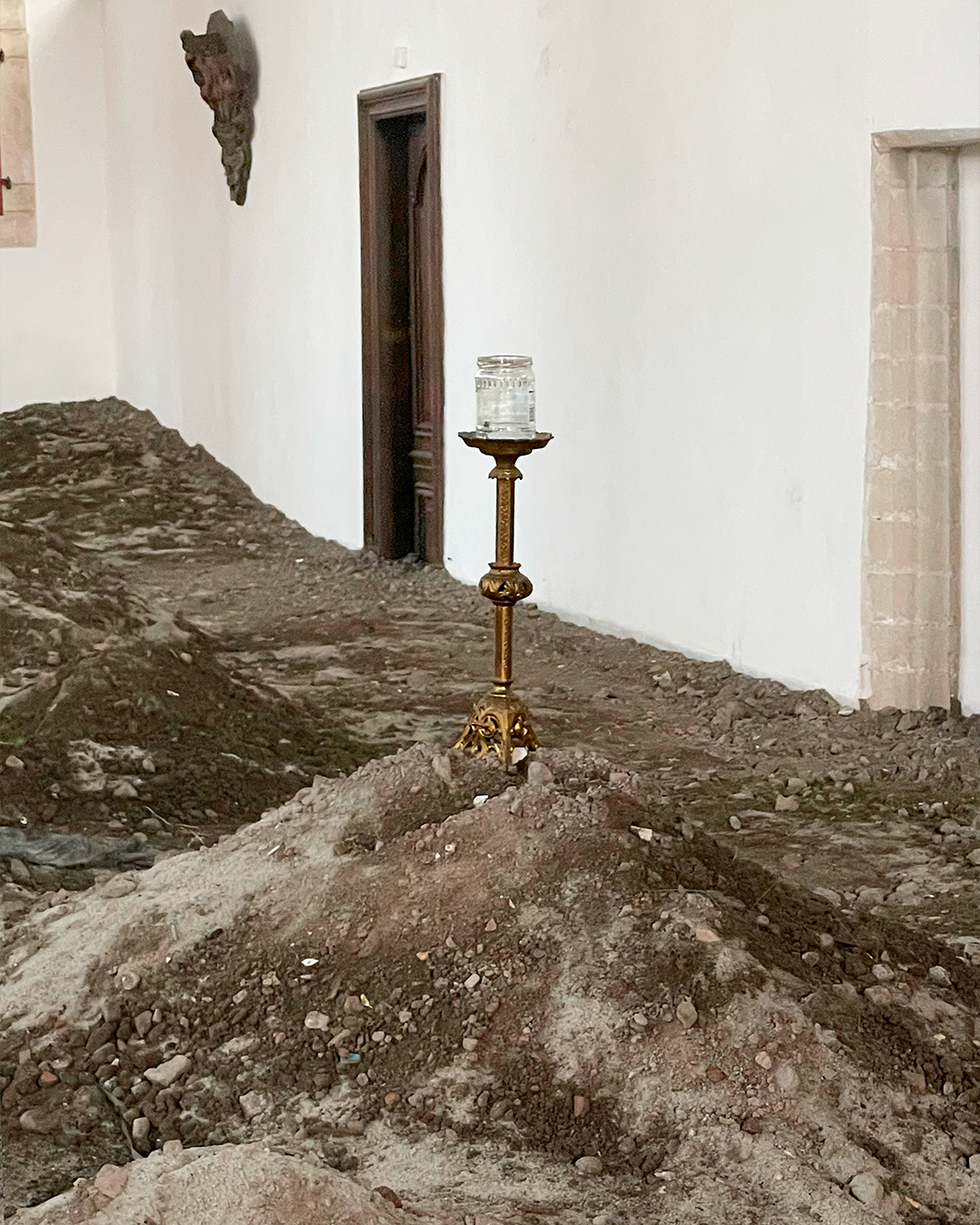
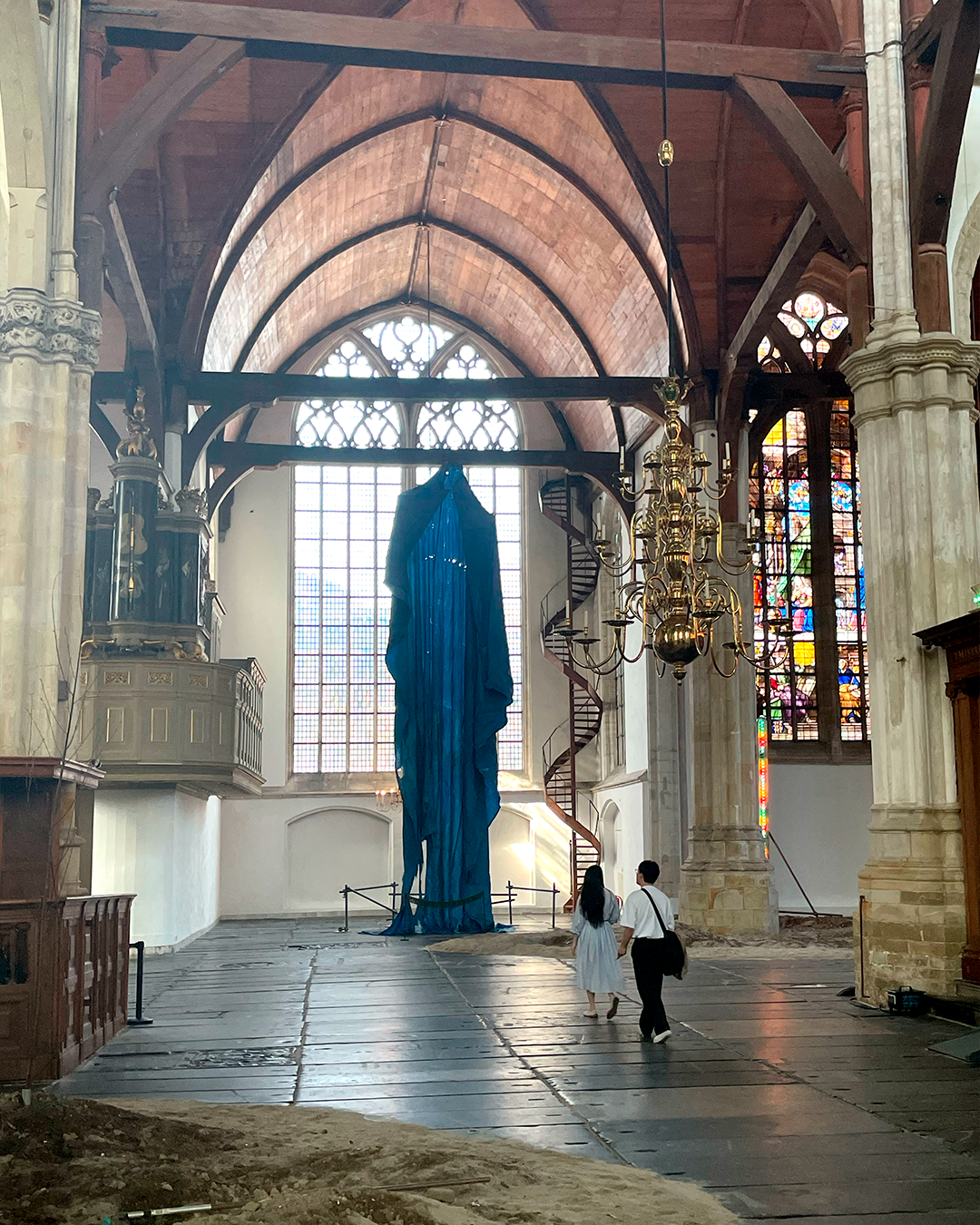
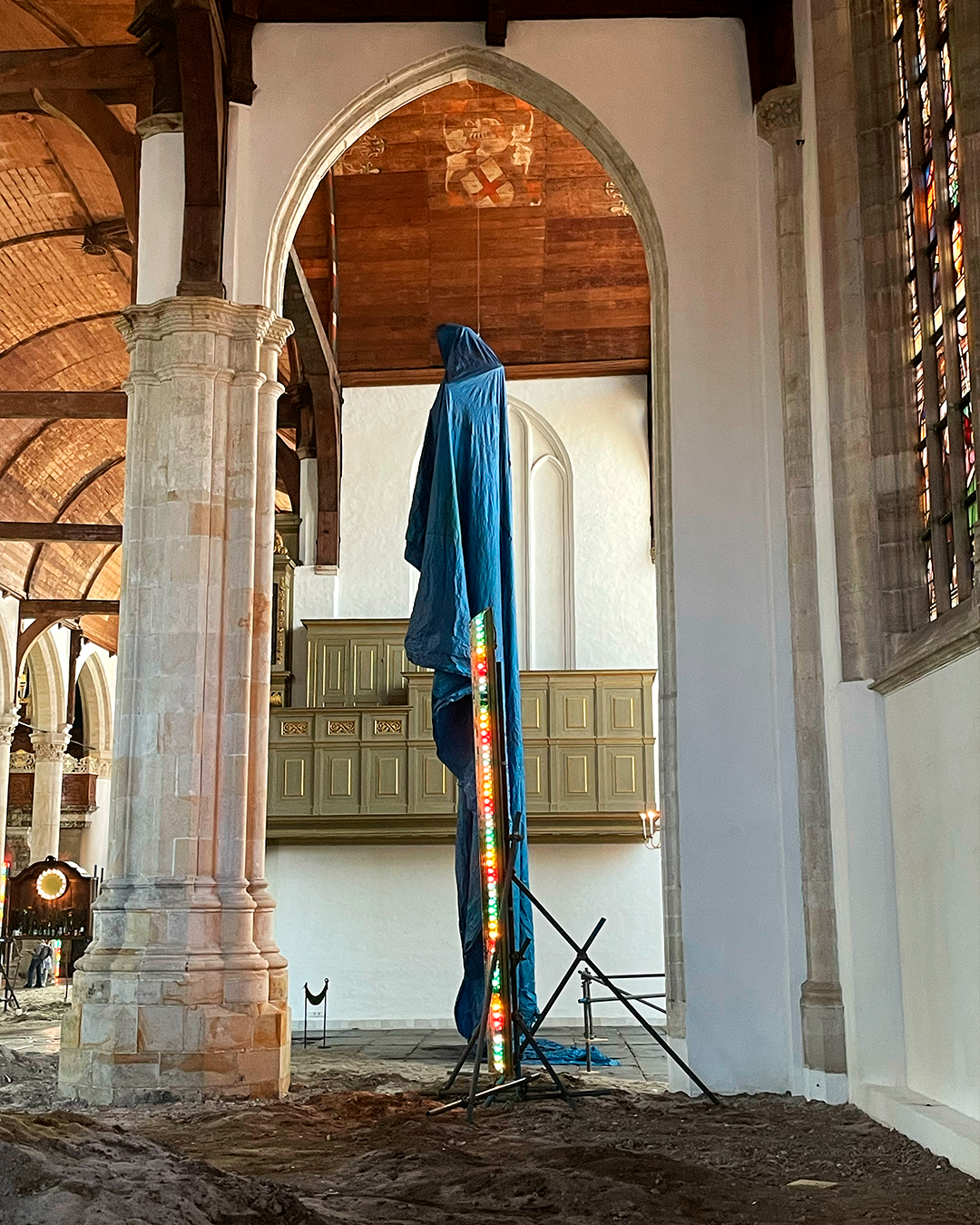
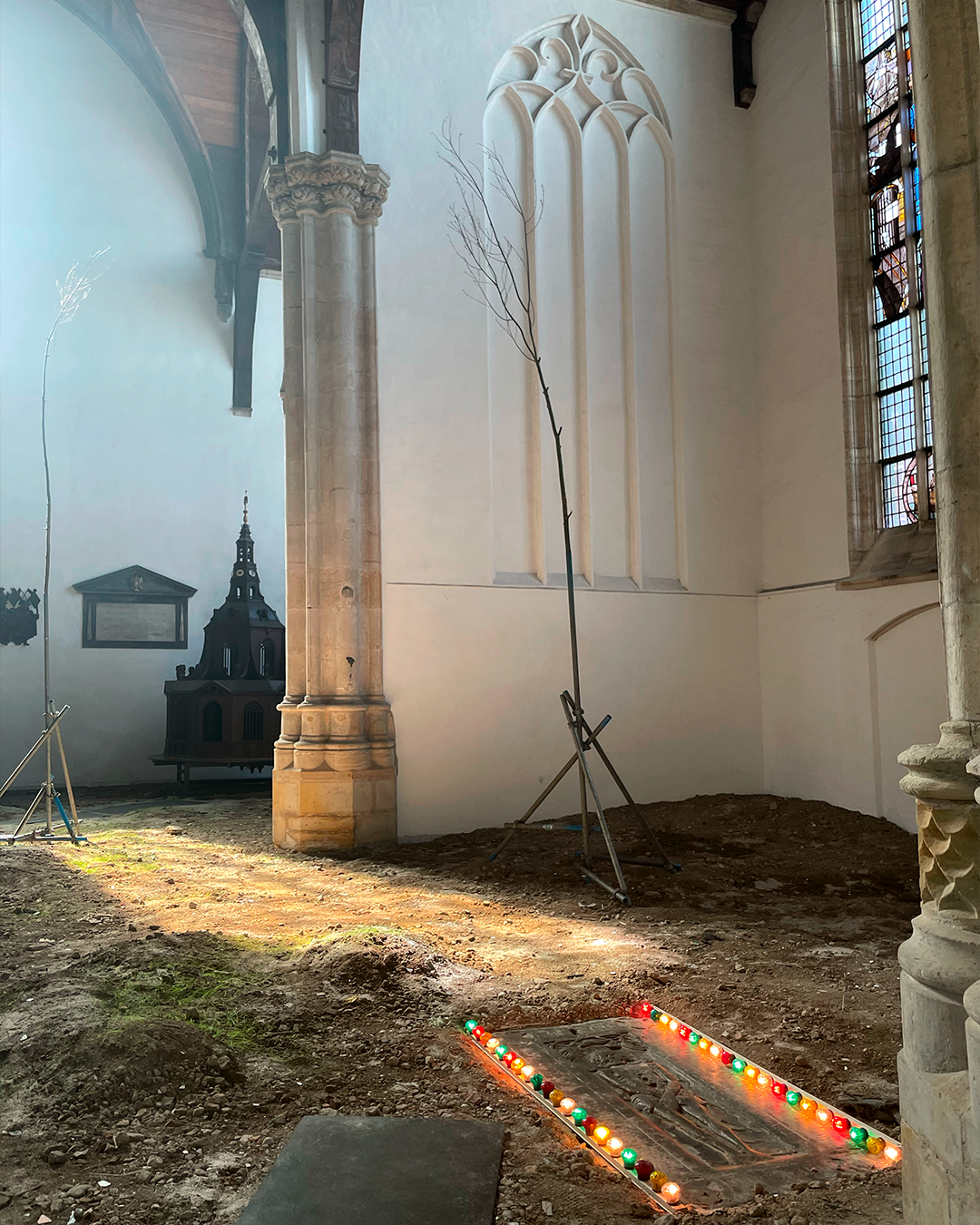
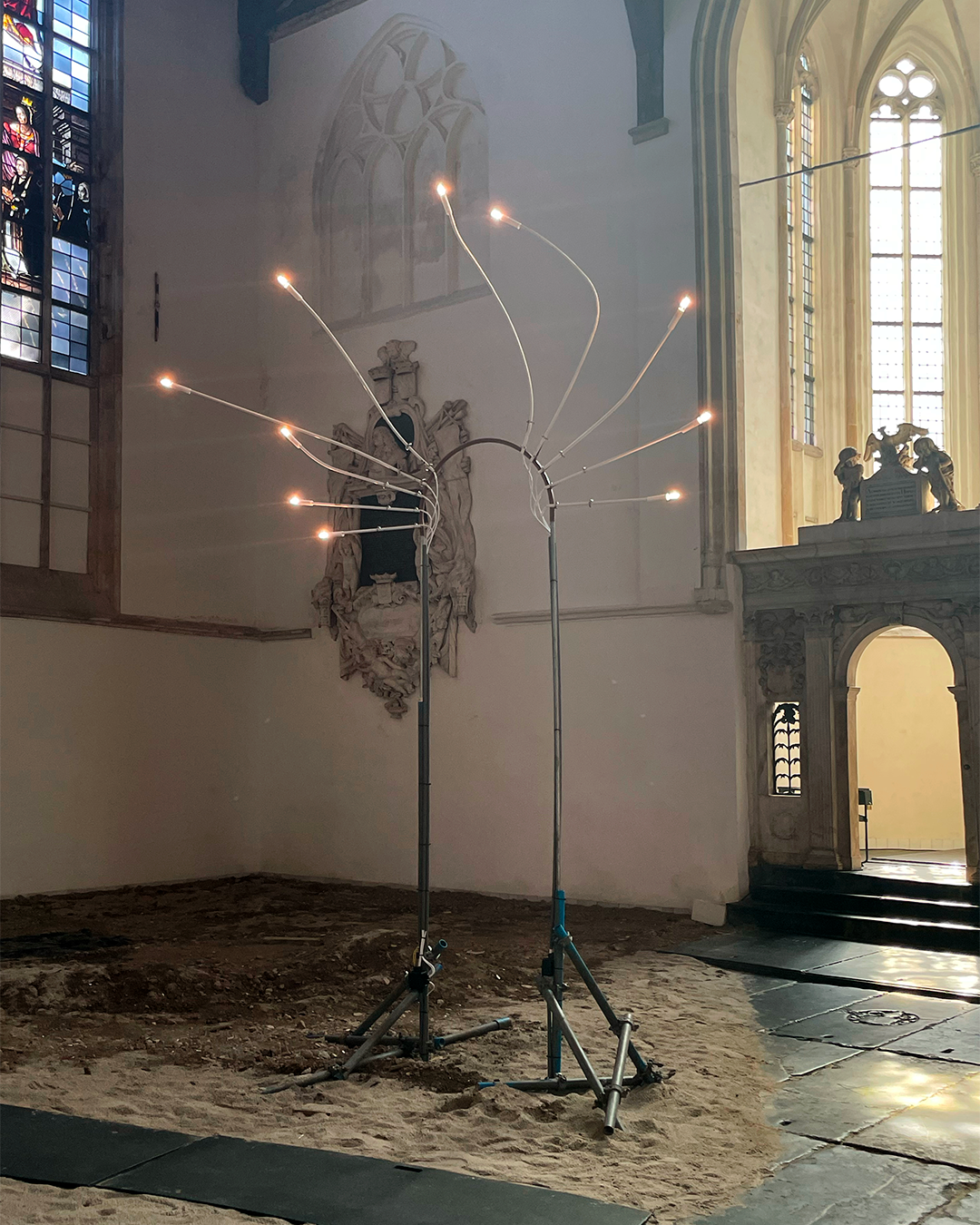
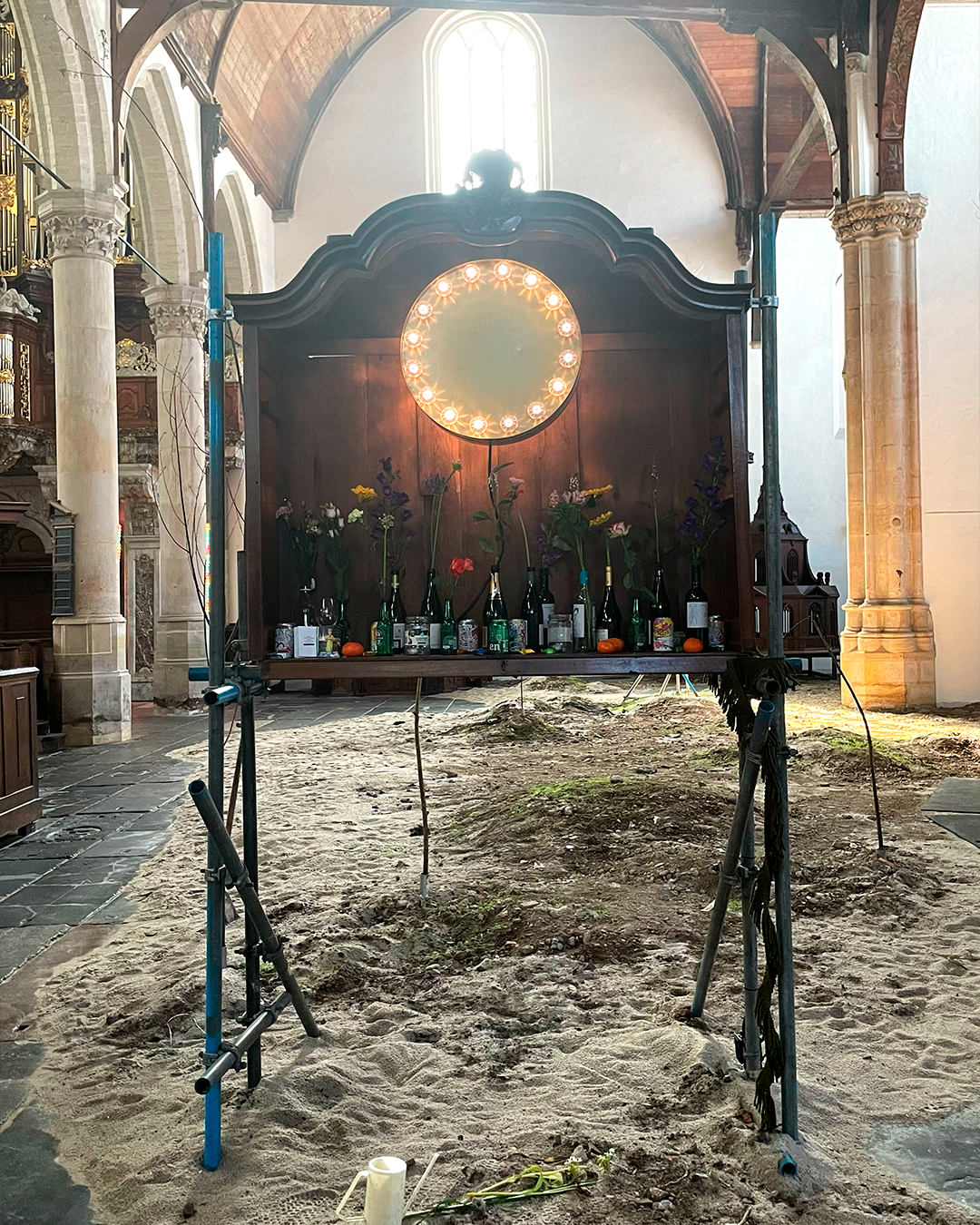
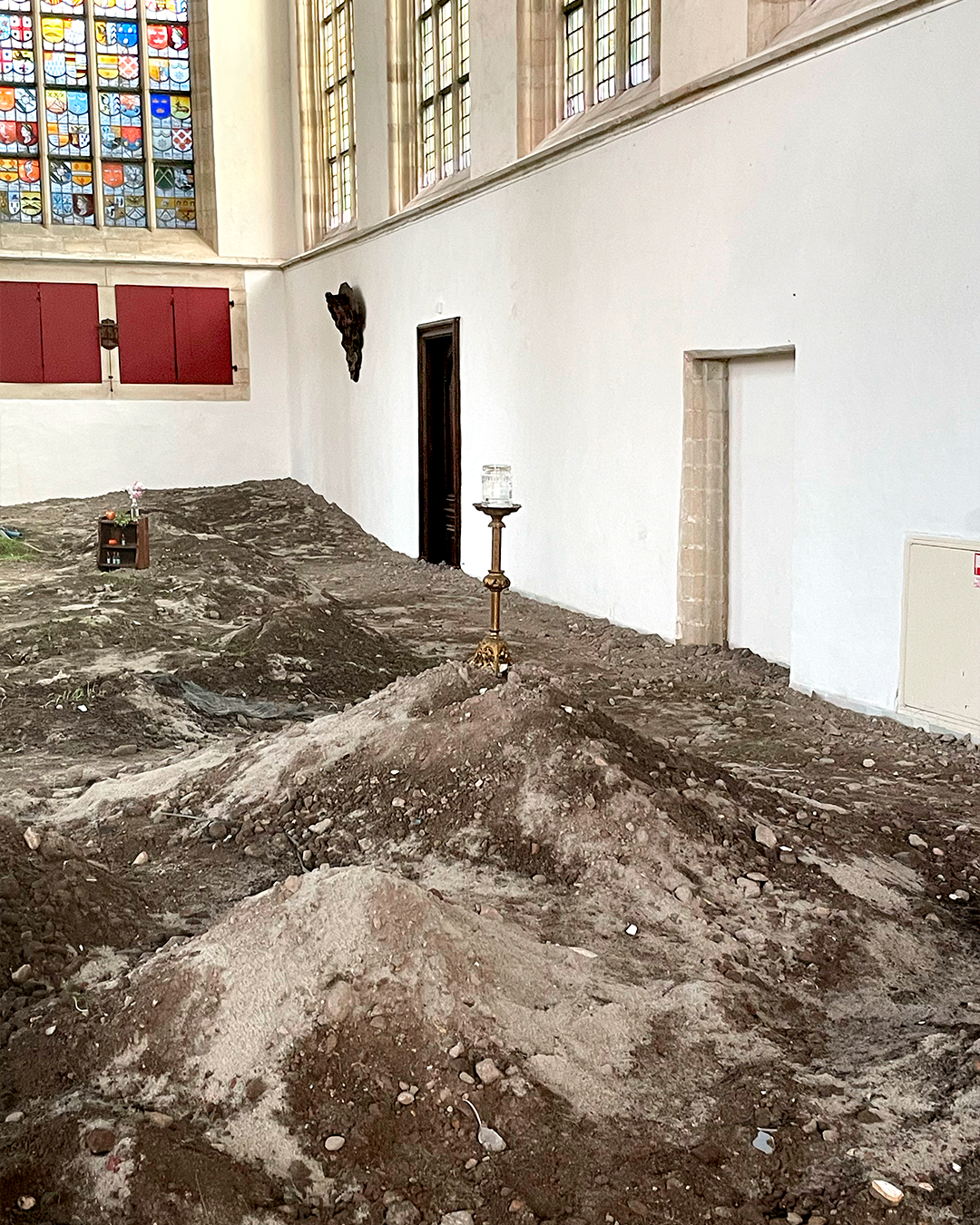
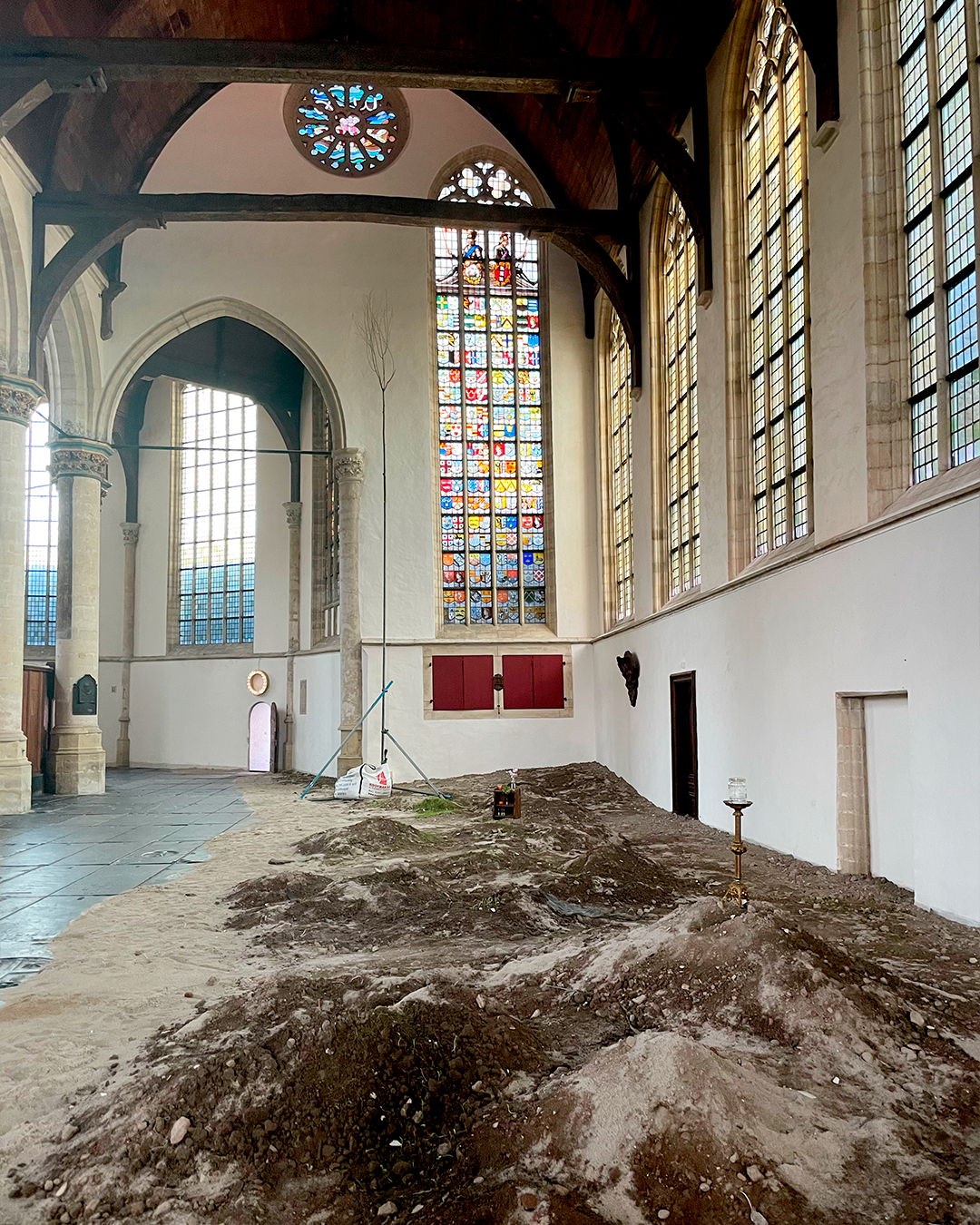
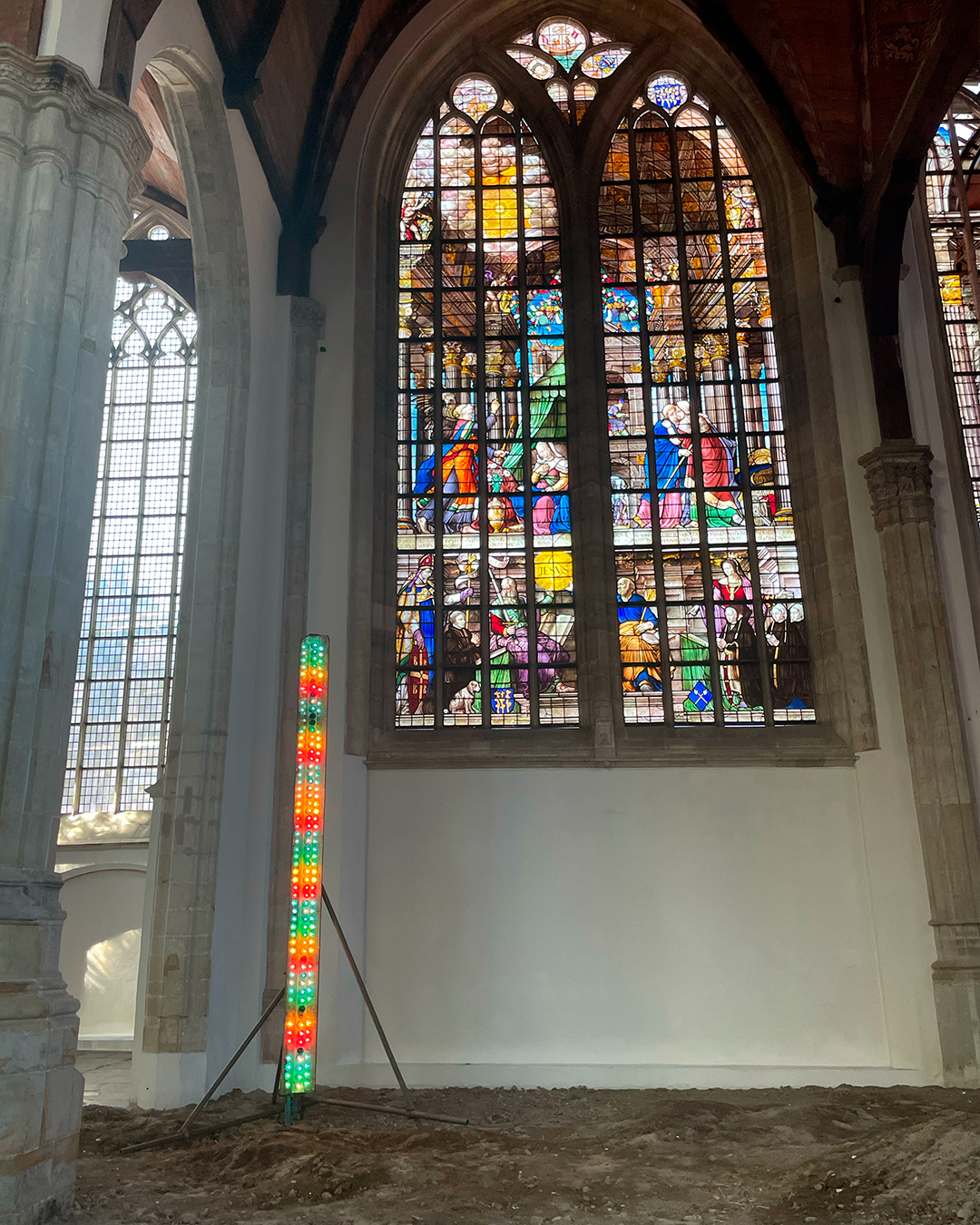
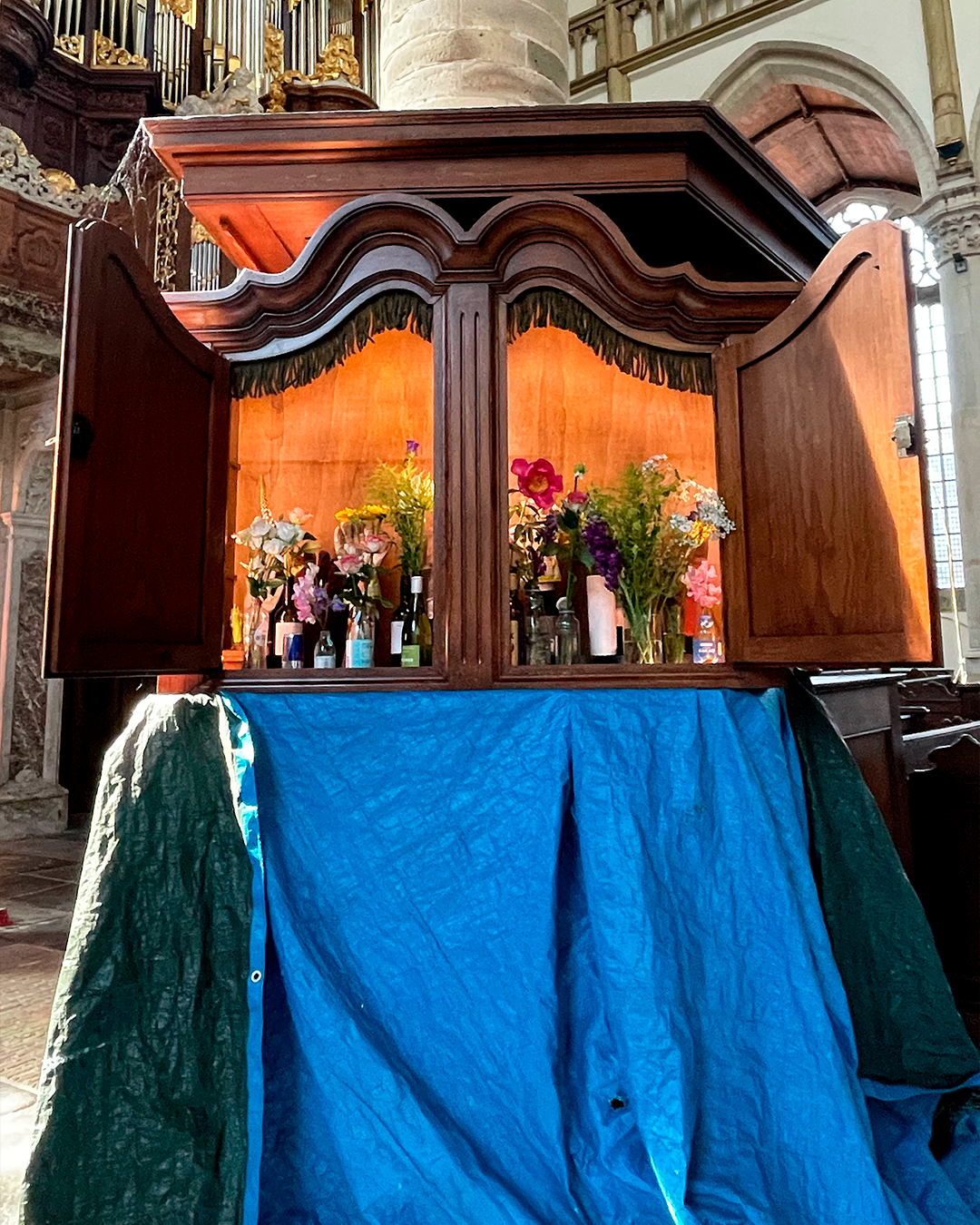
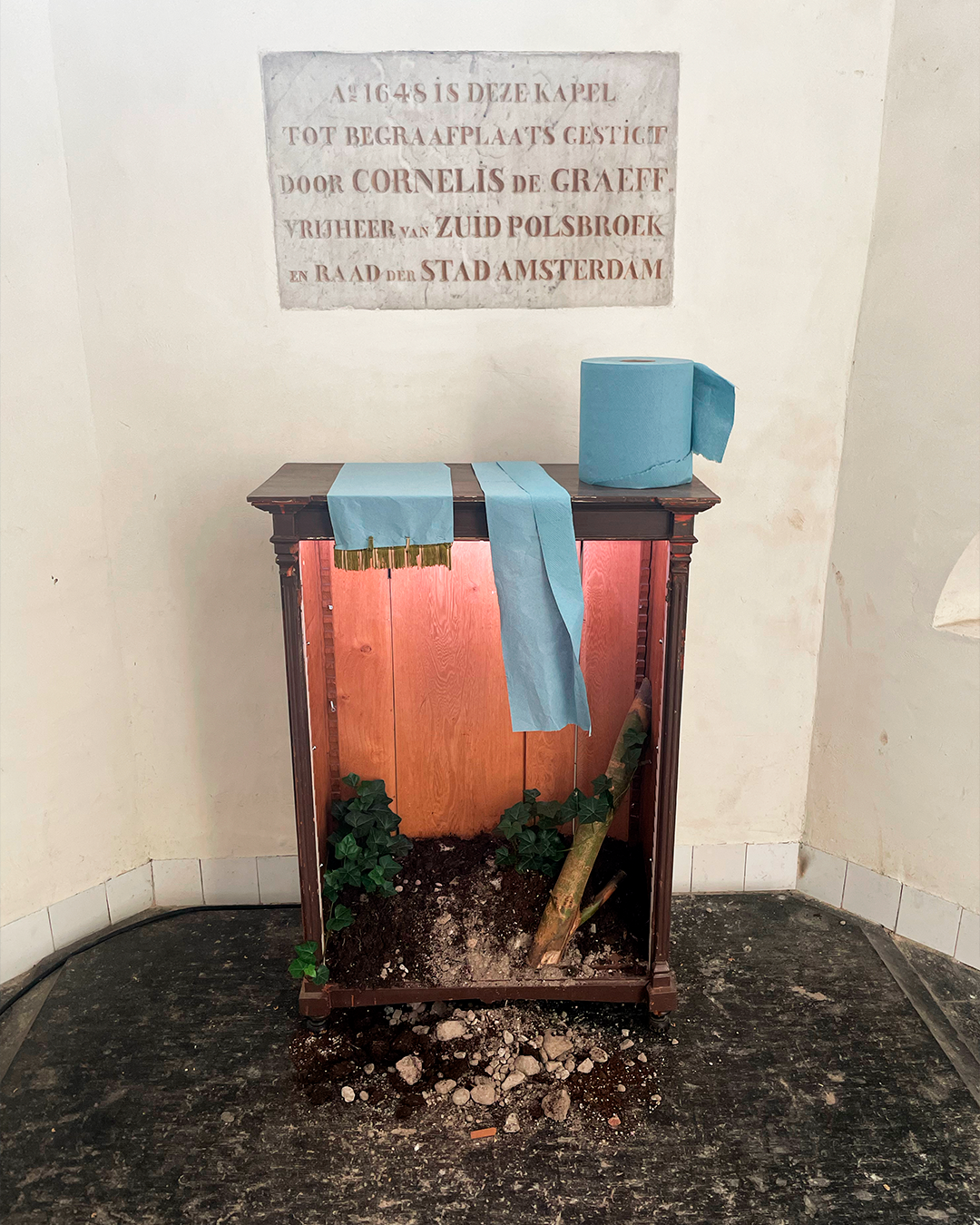
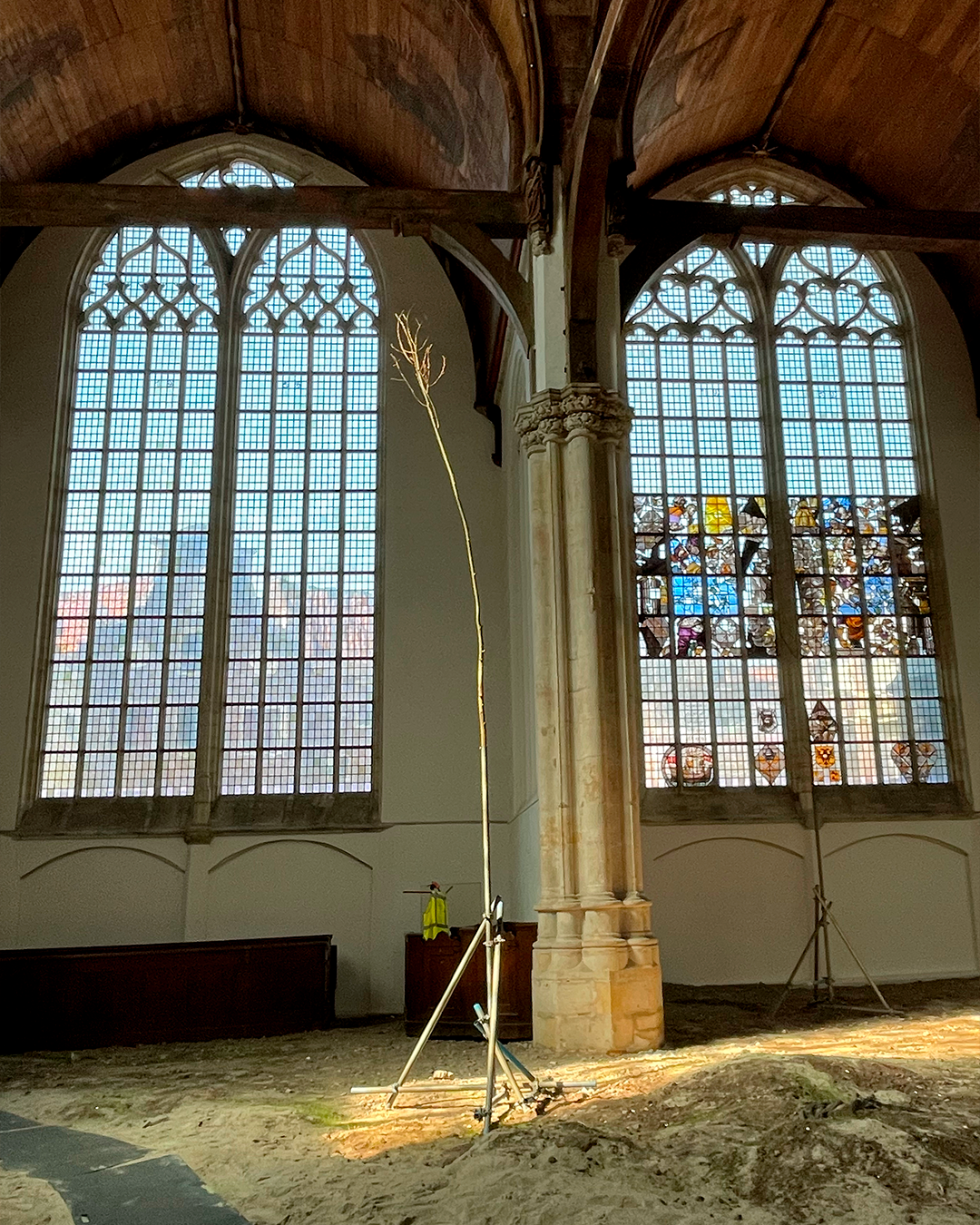
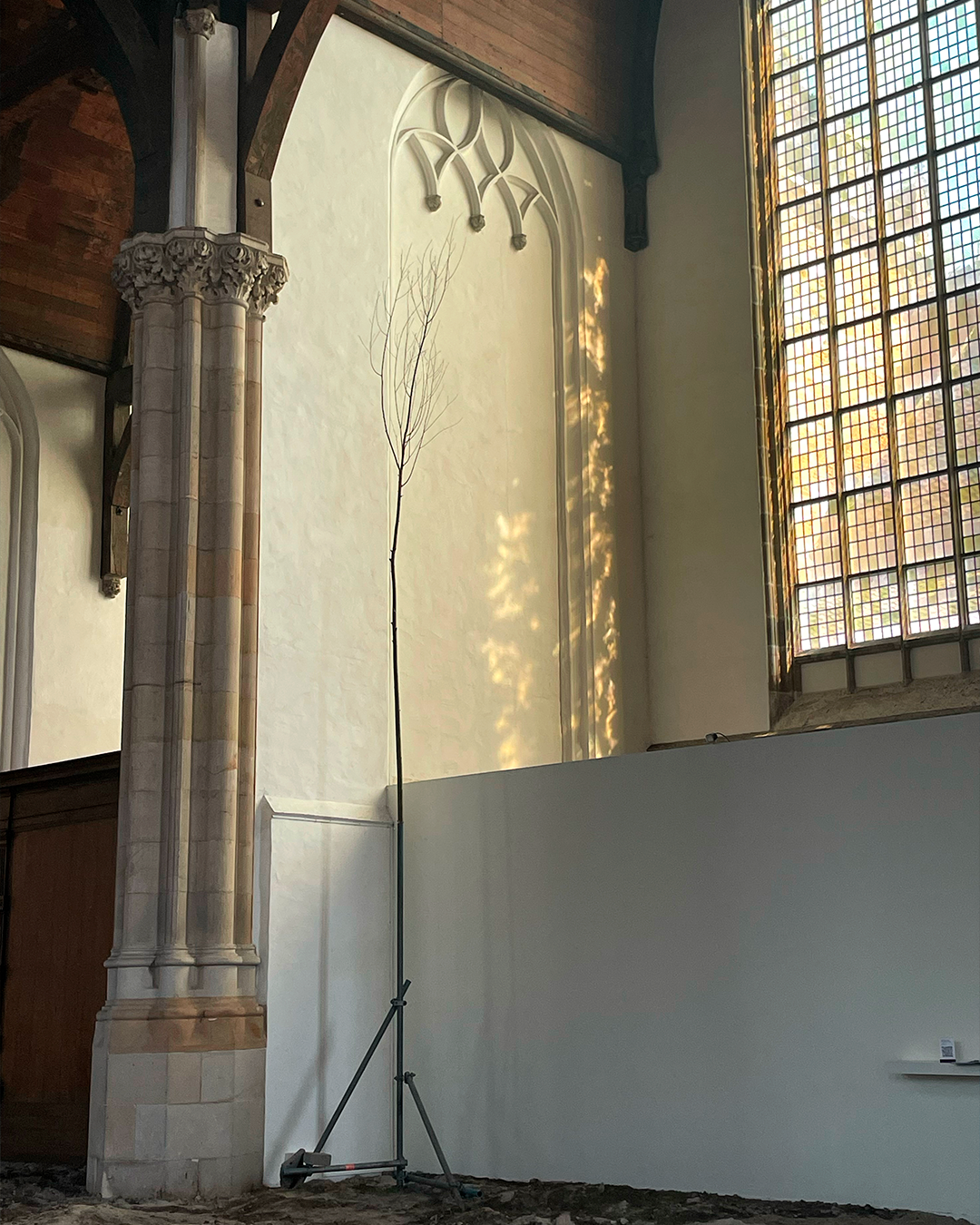
Piles of earth and rubble scattered across the floor formed a series of small islands. Broken furniture, scrap metal and other discarded objects collected from the public realm accentuated the building's architecture. Branches, tarpaulins and construction materials rose several metres into the air, pointing towards the eight-hundred-year-old timber vault overhead. All of it, arranged upon the archive-like ground of Oude Kerk—the oldest building in Amsterdam—seemed to expand, almost levitating through the tensegrity created by the dialogue between past and continuous present, public and intimate, underground and sky. It was striking to witness the city seeping into the church, carrying with it all the matter of change.
Estratum 2
I find it remarkable that this space, consecrated to Saint Nicholas in 1306—the patron saint of those who are never still: sailors, merchants and travellers—now houses an installation assembled from materials belonging to a strikingly similar world: that of transit. Both the space and the objects have acquired new uses and new meanings without erasing or concealing their former ones. On the contrary, they make this coexistence visible, embracing a freedom that emerges from shedding the single function once expected of them.
Estratum 3
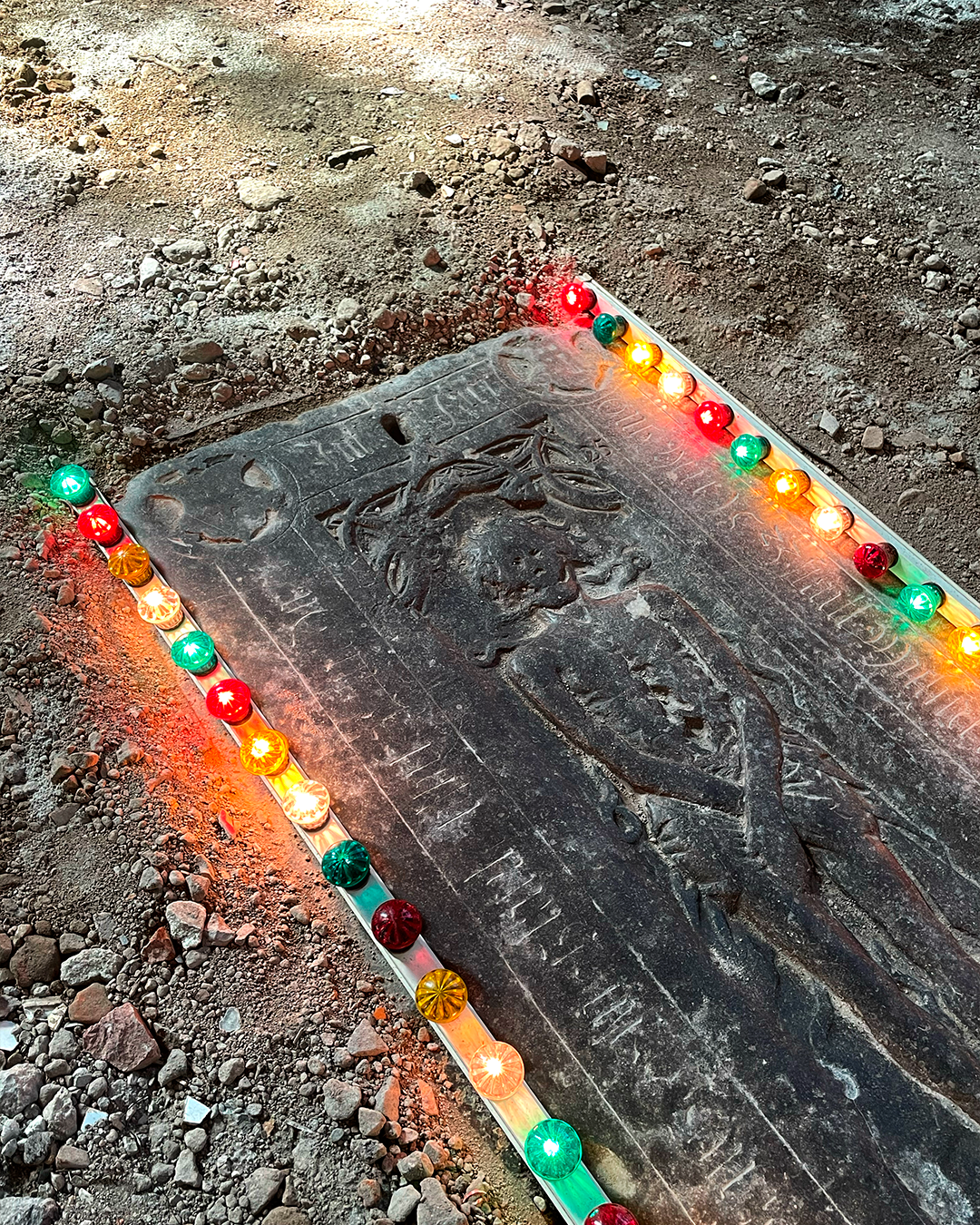
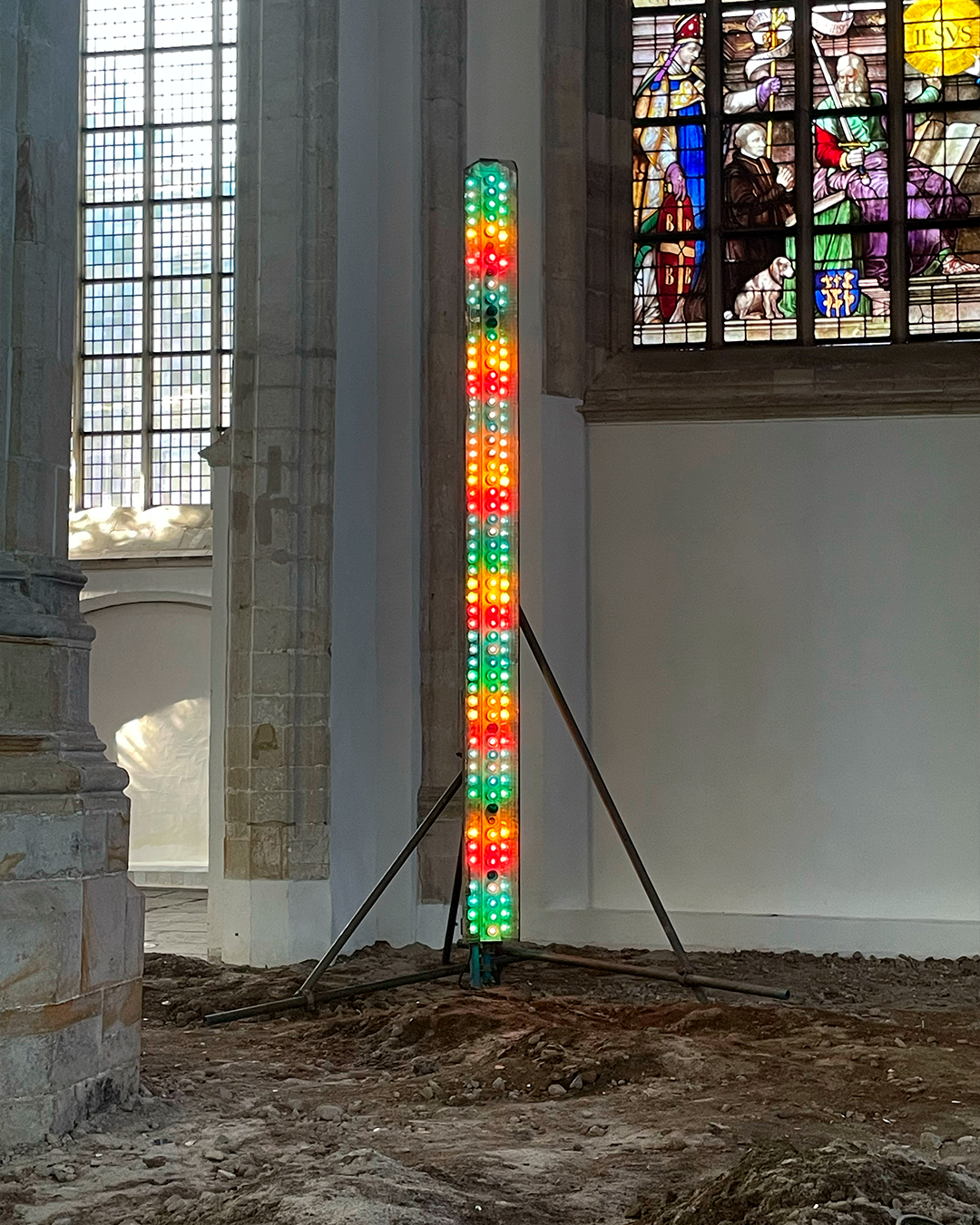
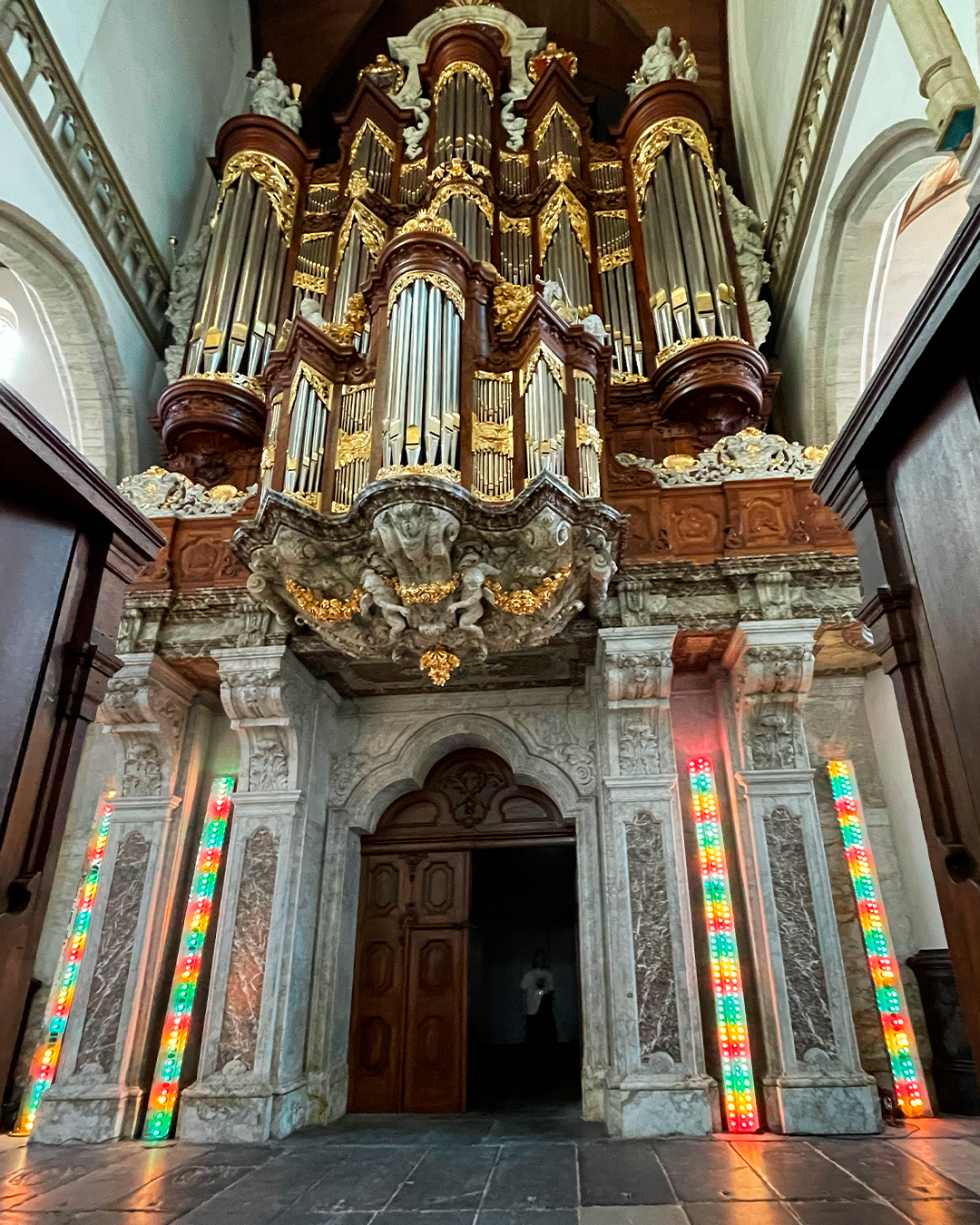
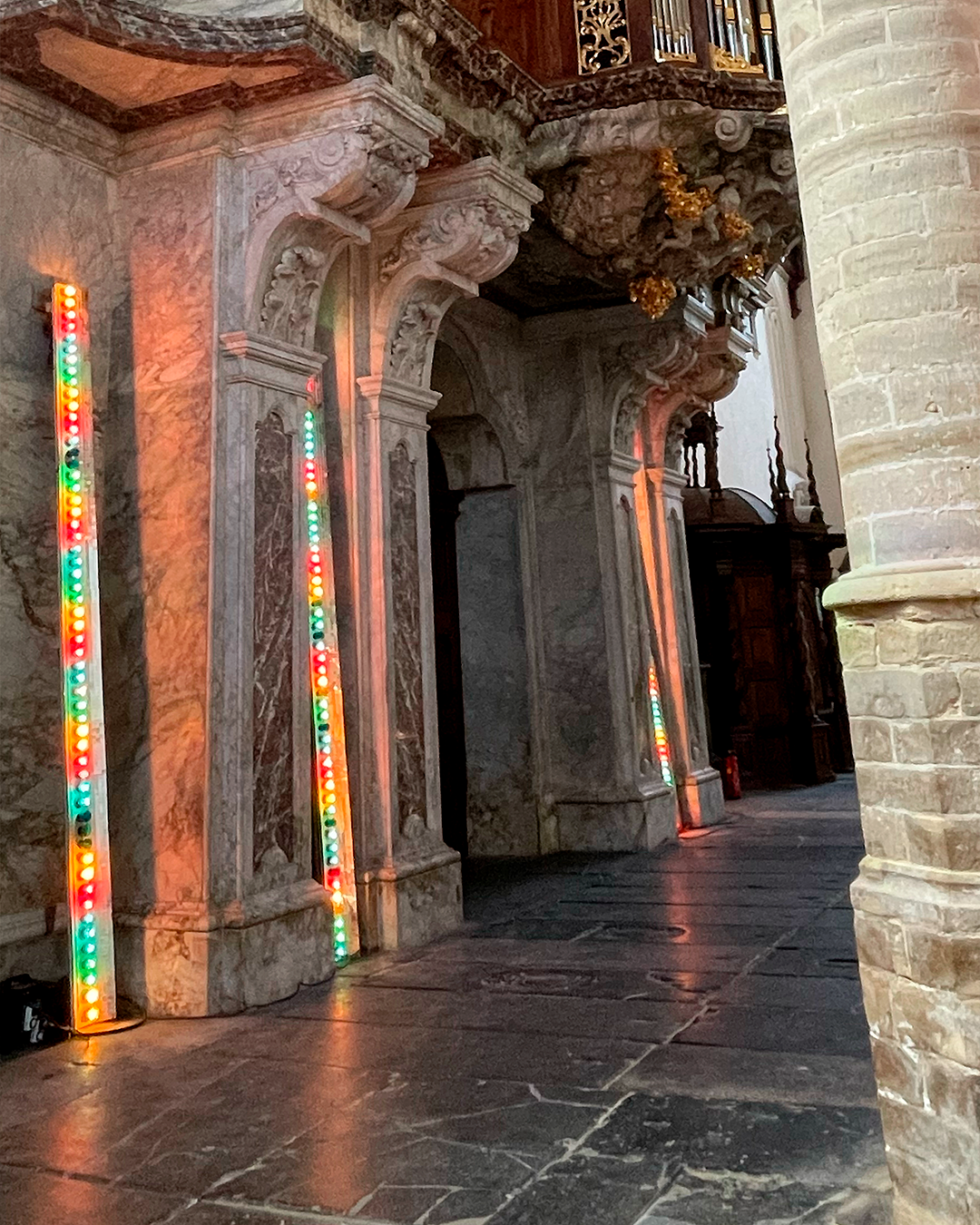
Darling's coloured lights reminded me of village fairs—the lights that crown travelling rides, folded away into trucks before appearing for a single week and disappearing again. Medieval stained-glass windows emerged as luminous narratives encoded in glass for those who could not read. Yet their effect extended far beyond storytelling: they saturated the space, constructed an entire scenography that transformed the perception of those who inhabited it, and disposed the body towards an experience of the sacred. Darling achieves something similar with his coloured bulbs. He places them with deliberate precision, transforming the visitor's experience while generating new narratives by drawing attention to the architecture, its history, and those details he chooses to illuminate.
Estratum 4
The sacred and the profane are not opposites. They need one another. Every object that passes from one symbolic register to another carries with it an irreducible residue of what it once was: there is profaneness in everything consecrated, and sacredness in everything profaned. Rubble, then, is not the opposite of the sacred. It is its raw material. Darling articulates precisely this tension. Yet his work does not remain on the symbolic plane alone: his choice of materials also stems from an acute awareness of the present. He turns our attention towards a moment in which social, political and ecological systems are straining under their own weight, selecting objects that bear the traces of that exhaustion and allowing them to remain within the installation as testimony to their time. In this way, the space is organised both vertically—between the subterranean and the celestial—and horizontally—between the common and the intimate—as a network of axes whose intersections, as much as the voids they leave behind, compose Godsworth.
Estratum 5
leyes,
liers,
loyal,
luna.